Weston, Florida • Primary-source summary
Weston’s license plate reader system
A guided summary in four parts: what happened, what it does, what’s unclear, and what residents can ask for.
In 2023, Weston approved and began deploying a fixed Automated License Plate Reader (ALPR) system. Records reflect a law-enforcement-led workshop earlier in 2023, followed by City Commission approval during a regular meeting. The decision placed fixed vehicle-scanning infrastructure at multiple locations in the city.
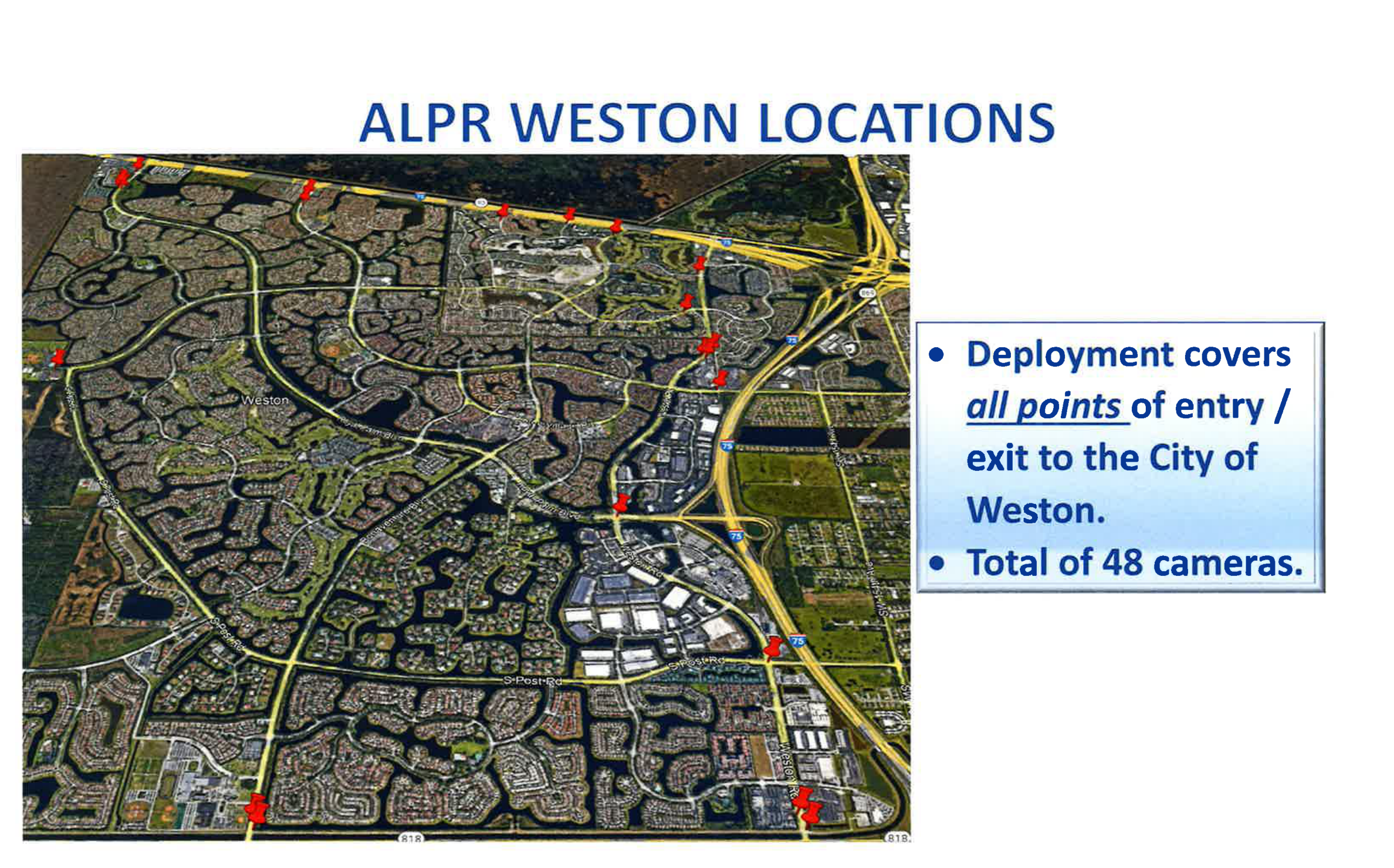
The public record does not, on its face, show independent third-party privacy or civil-liberties review as part of the approval process.
Fixed ALPR cameras automatically scan license plates of vehicles passing within camera range. The system captures plate data from all vehicles within view — not only vehicles suspected of wrongdoing.
Like other modern ALPR systems, fixed cameras also capture and store vehicle images along with plate characters. Those images preserve identifying details — vehicle type, color, and distinguishing features like bumper stickers, roof racks, dents, scratches, or other markings.
Even if a vendor claims the system is used “only for license plates,” a camera that stores vehicle images still produces visual records that can distinguish one vehicle from another over time. Contract language may limit how data is accessed, but it does not change what data is collected and stored.
Workshop materials presented February 9, 2023 state that the retention period for ALPR data and images within the Vigilant Solutions platform is three years.
The unresolved practical question is whether, and how often, ALPR records are copied out of the vendor platform — downloaded, exported, or incorporated into case files or other systems — and what retention rules apply to those copies. A vendor/platform retention setting can limit what remains searchable inside the ALPR interface, but it does not, by itself, prove that ALPR-derived records are not persisting elsewhere.
In Resolution 2023-43, the City stated that stored ALPR data does not include “Personal Identifying Information (PII)” and that identifying a person associated with a license plate requires a separate, legally authorized inquiry to another restricted-access database.
About the City’s “not PII” statement
The resolution distinguishes between what the ALPR system stores and the separate databases that associate a plate with a registered owner. The ALPR record itself may not contain a name. It does, however, create a time-stamped location record tied to a specific vehicle — the raw material of travel-history reconstruction.
In practice, ALPR systems capture plate number + time + location (and often a vehicle image). Even if identity information is stored elsewhere, those records enable reconstruction of where a vehicle was seen and when.
This is not merely a semantic distinction. The practical policy question is straightforward: what limits and oversight govern the collection, retention, sharing, and use of that record?
The procurement and closeout records focus on purchase, installation, and reconciliation. They do not, on their face, establish a complete public oversight framework for ongoing ALPR use. Residents may reasonably ask:
What is the enforceable maximum retention rule for Weston/BSO ALPR data, and how is it enforced? If ALPR records are downloaded, exported, or incorporated into case files or other systems, where are those copies stored and for how long?
Who can access Weston ALPR data (Weston only, BSO, other agencies) and under what conditions?
How often is the system queried, and for what categories of investigations?
Are there published audit logs, compliance checks, or annual transparency reports?
What prevents expansion of use, broader sharing, or longer retention over time?
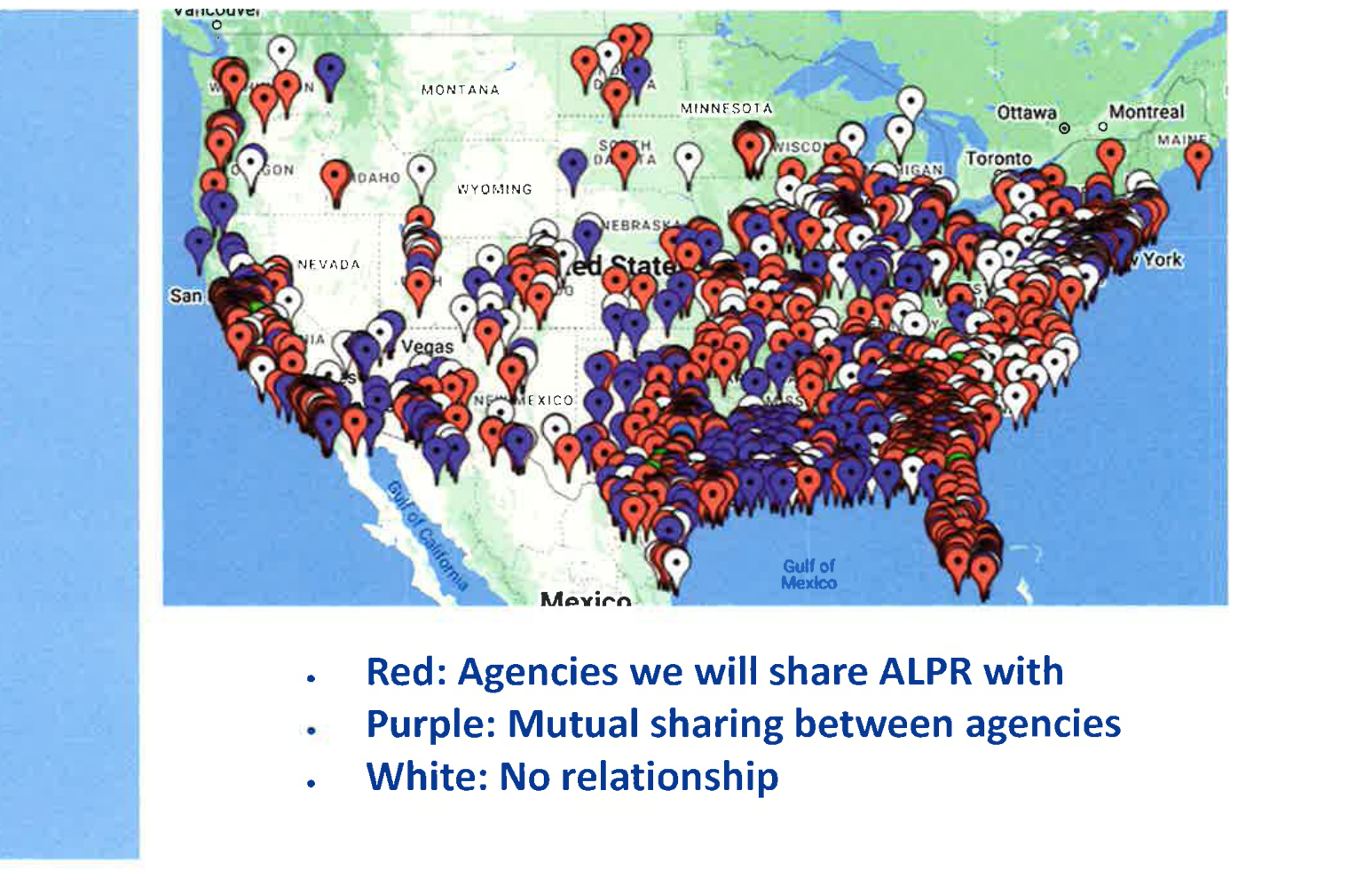
Without clearly defined limits, retention and sharing can expand gradually — often without renewed public debate, clear reporting, or accountability.
What residents can ask for.
Residents should expect the City Commission to adopt concrete safeguards — not vague assurances. These safeguards do not eliminate the underlying tracking capability. They make that capability visible, measurable, and politically accountable.
If the City cannot commit to enforceable limits and verifiable public reporting, residents are being asked to accept an expanding surveillance capability on trust alone.
If the City believes this system is necessary, these are the minimum guardrails the public deserves.
If those guardrails cannot be clearly defined and publicly enforced, residents will reasonably question whether the system should remain in place.
Want to help?
- Attend or speak: Ask directly about retention limits, access rules, agency sharing, and independent auditing.
- Share this summary: Help neighbors understand what has been installed and what questions remain.
- Help analyze records: Email deflockbroward@proton.me.